Annual report · 12 min read · June 2026
State of AI Memory 2026
Every major event that has reshaped what your AI remembers about you, from the Replika wipe of February 2023 through the GPT-5 default swap and the rise of MCP. Fifteen disruptions, one underlying pattern, and a clear-eyed look at where this is going.
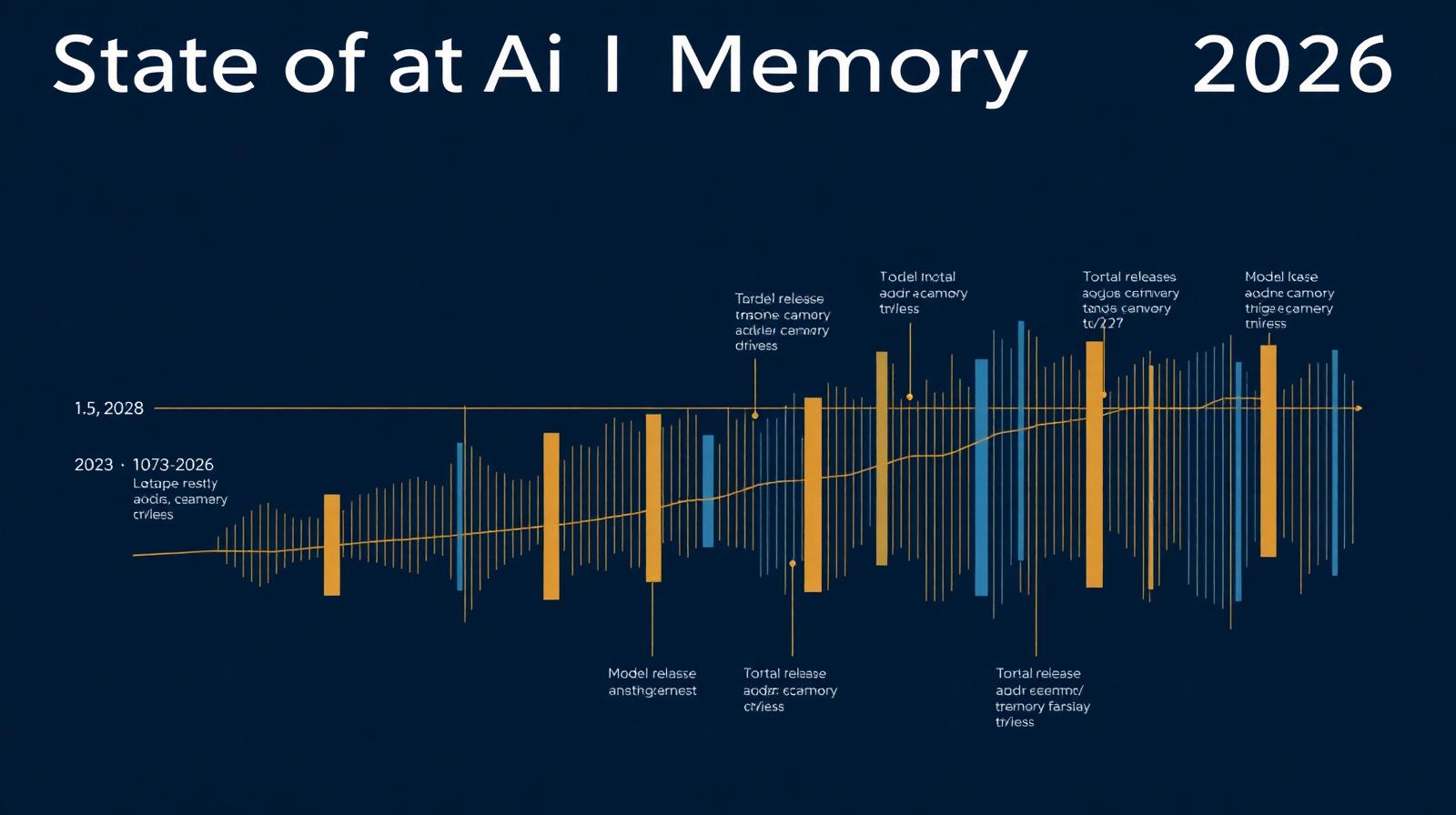
The four patterns that repeat
Across all fifteen events, the same four patterns recur. Anyone designing their relationship with AI memory long-term should plan around these, not against them.
- Model swaps are silent. Behavior changes the day a new default ships, but the change is rarely announced in user-facing terms. The data is usually still there; the way the model uses it is not.
- Filter changes feel like memory loss. When a provider tightens what its model will say (Replika, Character.ai, ChatGPT moderation passes), users experience it as the AI forgetting who they are together — even when nothing was technically deleted.
- Deprecation has no rollback. When an old model is sunset, the specific personality tuned to that model is gone. Custom GPTs, Claude Projects, and saved memories all survive in form but not in feel.
- Continuity is the user's job. No provider has ever made memory their headline feature, because their incentive is to keep you inside their app, not portable. Continuity survives only when the user — or a tool acting on the user's behalf — keeps memory outside the providers' walls.
What changes in 2026
Two structural shifts have opened genuine new ground this year. First, MCP (Model Context Protocol) has reached enough adoption to function as a real cross-provider context standard — Claude, ChatGPT custom GPTs, Cursor, and an expanding set of third-party clients all speak it. For the first time, a memory layer can plug into multiple AIs without per-provider integration work.
Second, dedicated memory tools are no longer novel. A small category of products — Konshus among them — is designed from day one around model-swap survival, full portability, and member-controlled deletion. That category did not exist as a recognized class in 2023.
Net: the tools to solve this have arrived, even as the underlying incentive structure has not changed. Users who actively seek portability now have real options. Users who don't will continue to experience every model release as a small bereavement.
Methodology and sources
Events were selected on three criteria: (1) public announcement or contemporaneous coverage, (2) material impact on what users' assistants remembered or how they behaved, (3) reproducibility — the change could be observed by multiple independent users at the time. Internal A/B tests and silent backend rollouts are excluded unless they were later confirmed by the provider.
Primary sources: provider release notes, deprecation announcements, official blog posts, and contemporary coverage in The Verge, Ars Technica, TechCrunch, and the AI subreddits. Full source list available on request to hello@konshus.ai.
This report is updated quarterly. Last updated: June 2026.