AI memory design
How should AI handle shared family memories?
By The Konshus Team
The short answer
AI should preserve who contributed each family memory, what remains uncertain, and who has permission to access it rather than silently merging accounts into one official story. Independent contributions and traceable summaries are design proposals inspired by human-memory research, not approaches already validated by those experiments.
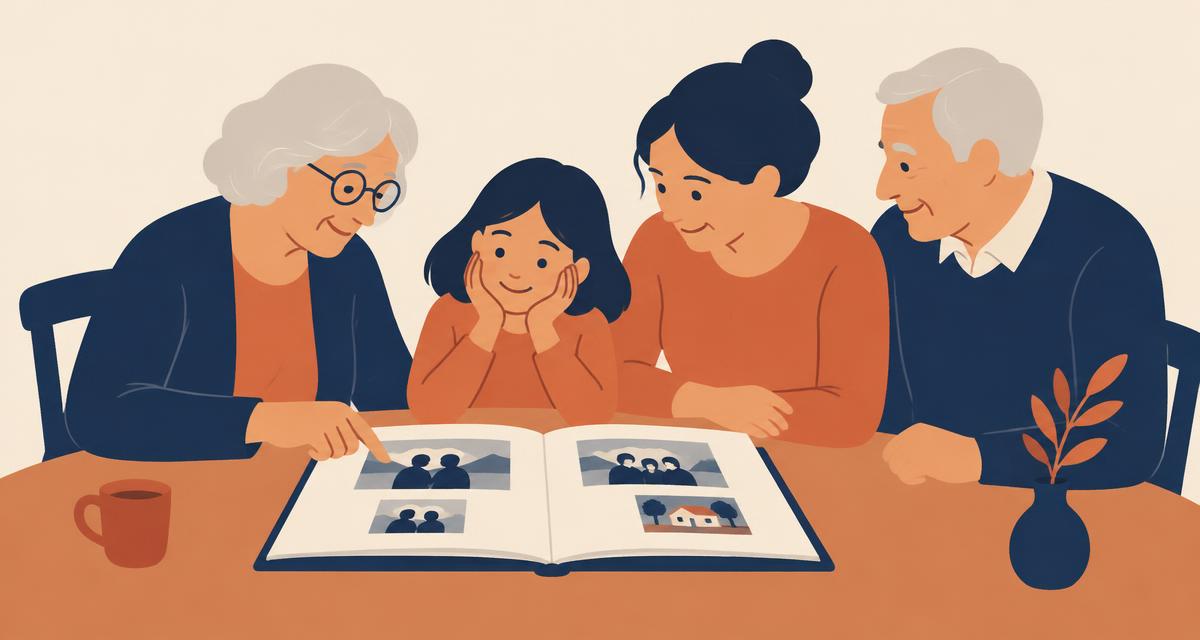
Imagine two siblings uploading accounts of the same holiday. One remembers feeling close to the family. The other remembers an argument. A summary that turns both accounts into a uniformly happy trip would be tidy, but it would lose something important. Shared subject matter does not mean identical experience.
A useful AI archive would need to handle more than dates and photographs. It would need to distinguish evidence, interpretation, disagreement, and access. Human-memory research helps explain why those distinctions matter. It does not settle every engineering decision, but it offers reasons to question systems that automatically compress several people’s recollections into a single confident narrative.
Should AI collect separate accounts before combining them?
Weldon and Bellinger’s research on collaborative inhibition found that groups recalling together could produce fewer distinct items than the pooled output of people recalling independently. A group conversation can help some details surface while interrupting other routes through memory. Hearing an account is not a neutral step in reconstructing your own.
One design proposal is therefore to invite separate contributions before showing a combined account. Each person could describe an event without first reading the system’s preferred summary. The AI could then identify overlaps and differences and invite optional additions, while keeping the original contributions available.
This approach is a hypothesis to test, not a result established by the human experiments. An independent-first workflow might preserve useful details, but its effort and usability would also matter. A process that demands too much from every contributor may fail in ordinary family life.
The aim would not be to prevent conversation. It would be to avoid making early agreement a condition of being heard. People should be able to contribute a different recollection without the system treating it as a defect to remove.
What should an AI memory record preserve?
A shared record should distinguish an event from the accounts of it. A holiday may have happened at an approximately known time, while its date remains disputed and its emotional meaning differs across contributors. Those are different kinds of information, and a single polished sentence can hide the distinctions.
Attribution and uncertainty should travel with the claim. Imagine one person remembering a trip as occurring in 1998 and another suggesting 1999, with no verified date on the photograph. A faithful record would retain those positions rather than silently selecting a year. Agreement, if it later emerges, would still not by itself prove historical truth.
Roediger, Meade, and Bergman’s social-contagion experiment gives a reason to take this seriously. Participants later reported some nonexistent objects introduced by another person. An AI that strips uncertainty from a recollection could give a tentative detail a much more authoritative form.
The system’s own inference should therefore remain distinguishable from a contributor’s report. A summary can help people navigate material, but it should not become new primary evidence for its own claims. Users should be able to return to the original contribution and see how a conclusion was reached.
Who should control access to a shared story?
Being part of the same event does not automatically grant access to every account of it. A person may be comfortable sharing a photograph but not a private reflection attached to it. Another may agree to a family archive without agreeing that their words should enter someone else’s personal archive.
A proposed system should separate those permissions. Contributors would need understandable choices about what is shared, with whom, and for which use. Approval and withdrawal should be clear, especially where children, strained relationships, or people who never consented to a digital record are involved.
The same boundary applies to a directory of expertise. Transactive memory involves knowing who knows what. An AI could similarly point toward a person, note, or document likely to contain an answer. But knowing that someone has information is not authorization to retrieve or disclose it.
These are ethical and product choices, not conclusions that a memory experiment can dictate. The guiding distinction is practical: helping people connect their accounts should not require them to surrender control of every detail. A shared archive can contain relationships between records without making all records equally accessible.
How could repeated summaries narrow the family story?
Cuc, Koppel, and Hirst’s 2007 research found evidence of socially shared retrieval-induced forgetting. Under the studied conditions, hearing someone selectively recall some information could make related, unmentioned information harder for a listener to retrieve later.
This does not mean an omitted detail is erased, that every conversation produces lasting forgetting, or that an AI summary has been shown to cause the same effect. The finding concerns later accessibility under particular retrieval conditions. Its relevance to AI is a design concern to investigate, not an established technological outcome.
Still, a system that repeatedly surfaces the same celebrated holiday or achievement could present an increasingly narrow selection of a life. Frequency of recall is not the same as importance. Quiet experiences and less frequently told accounts may matter even when they have attracted little attention.
A proposed safeguard is to keep relevant, less-repeated source material discoverable and make competing perspectives visible when permission allows. Repetition should not upgrade a claim’s evidential status. The system should not treat its earlier summaries as independent confirmation simply because it has generated them many times.
What would make an AI memory aid dependable?
Sparrow, Liu, and Wegner’s 2011 studies found that, in relevant experimental conditions, expecting future computer access shifted remembering toward where information could be found rather than the information itself. This was evidence of a strategy change under specific expectations, not proof that digital tools globally damage memory.
For an AI archive, the implication is a question of dependable access. If people rely on it as a route to their records, reliability, correction, portability, and inspection matter. A useful tool could preserve links between fragments without claiming to replace the people who originally supplied them.
Evaluation should also separate factual reliability from richness. Harris and colleagues found that long-married couples could produce richer episodic details together without simply listing more trips. An AI archive might likewise be judged on both verified details and preservation of meaningful texture, but richness must never excuse factual errors.
A proposed opt-in test could compare independent-first collection, a clearly labeled immediate draft synthesis, and source-only indexing. Evaluators could check verified details, useful unique contributions, source recognition, mistaken transfers between people, responses to conflict, and participant effort. None of these proposals promises an authoritative account of a family’s past; the more modest goal is an archive that helps people find records, understand their origins, and read different perspectives without mistaking a convenient summary for the final word.
In one sentence
- Attribution
- Information identifying who supplied a claim and distinguishing that contribution from an AI inference or summary.
- Independent-first collection
- A proposed workflow that gathers separate accounts before presenting contributors with a combined narrative.
- Socially shared retrieval-induced forgetting
- Reduced later accessibility of related, unmentioned information after listening to selective recall under particular experimental conditions.
Key takeaways
- Keep contributors’ accounts distinct before attempting a shared synthesis.
- Store attribution, uncertainty, and permissions alongside remembered details.
- Do not treat repeated AI summaries or family agreement as independent proof.
- Test factual reliability, meaningful detail, source recognition, and user effort separately.